

ECOLOGICAL TREATMENT SYSTEMS
In nature there is no waste, since the waste of one organism is food for another. Living Water
Our Story
In 2018 we finished developing our ground breaking print studio. A major issue for any print manufacturing plant is the disposal of contaminated waste water and inks. Investigations revealed that there were no existing methods readily available to treat print waste sustainably. Therefore we took matters into our own hands and became the first print works in the country (possibly the world) to install a Living Water Ecological Treatment System which is based upon wetland ecology principles, treating our print waste whilst also creating new habitats and increasing biodiversity.
Wetlands
Wetlands are some of the oldest and most complex habitats on Earth, rivalling Tropical Rainforests in the number of species they support. The term Wetland describes any habitat characterised by standing water or saturated soil for a large part of the year.
Living Water Ecological Treatment Systems
Wetlands, in nature, perform the similar function to the liver in animals, purifying water within the ecosystem. Wetlands provide a safe, stable, aerobic environment that attracts bacteria and invertebrates such as nematodes. In exchange, these organisms break down sediments, nutrients and toxins into a form that plants can utilise. The symbiotic cycle continues, benefitting the entire habitat and greater ecosystem.
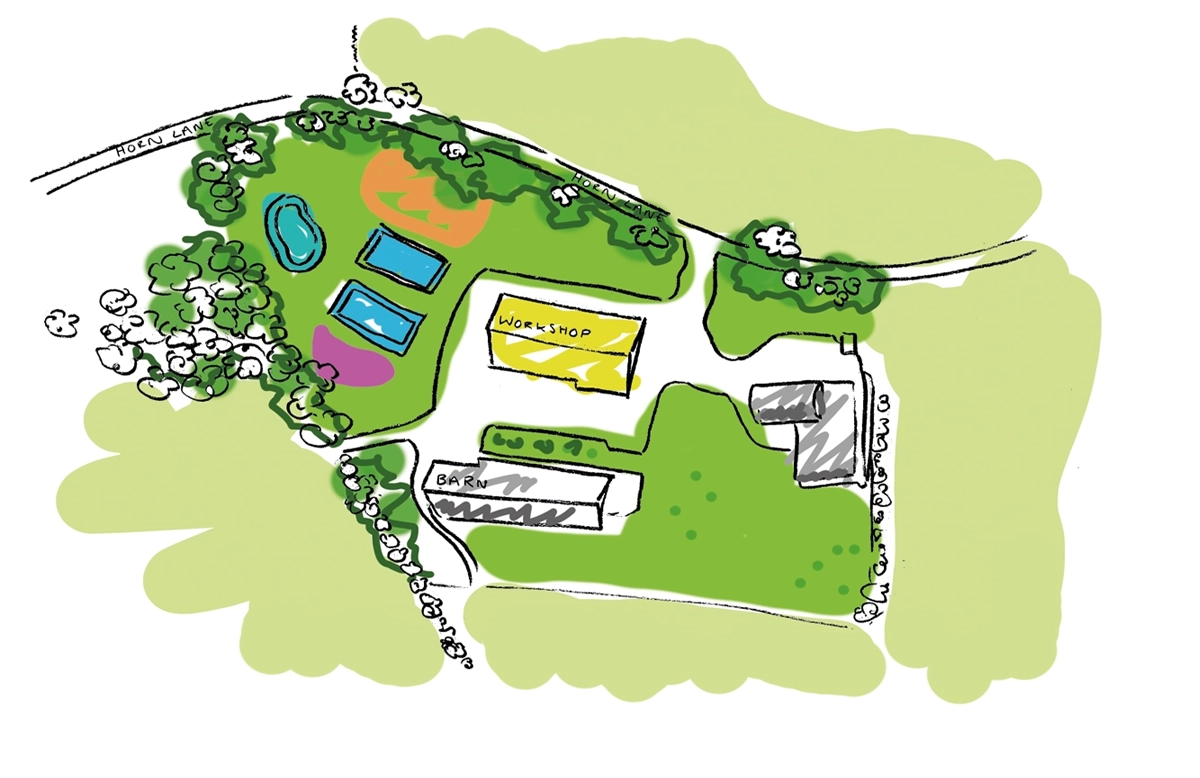

Designing R&W’s Ponds
Each plant species responds differently to waste, therefore it is essential to match the ecological process to the pollutant, maximising efficiency and effectiveness. A complex effluent can require up to six ecological processes. Our system contains 21 species of plant.
With the help of Living water we have designed on-site treatment for our print waste water that leads to an ecology rather than simply a discharge into a water course, while also creating habits and increasing biodiversity.
Willow Nursery
The various species of Willow planted around the ponds utilise the treated water. They love the wet and are excellent trees to absorb the run off from our treatment system. We coppice these trees every year, using the whips for new planting and Willow Weaving.
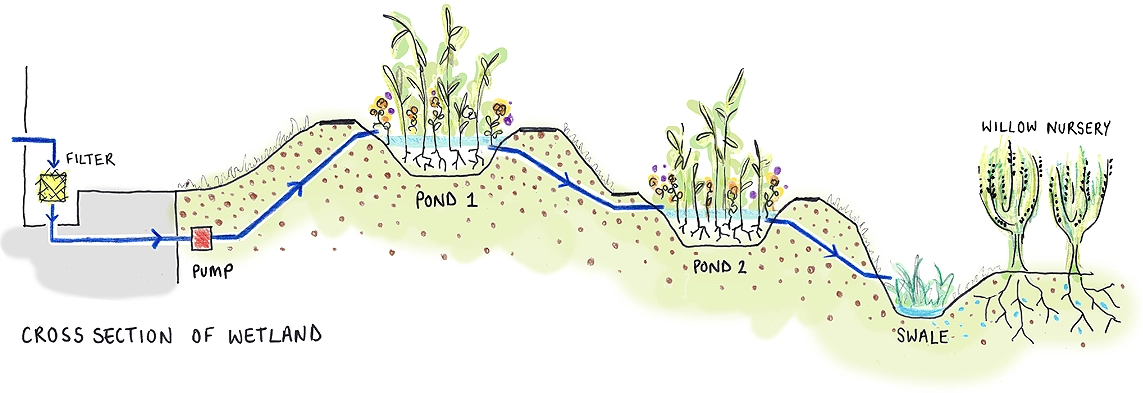
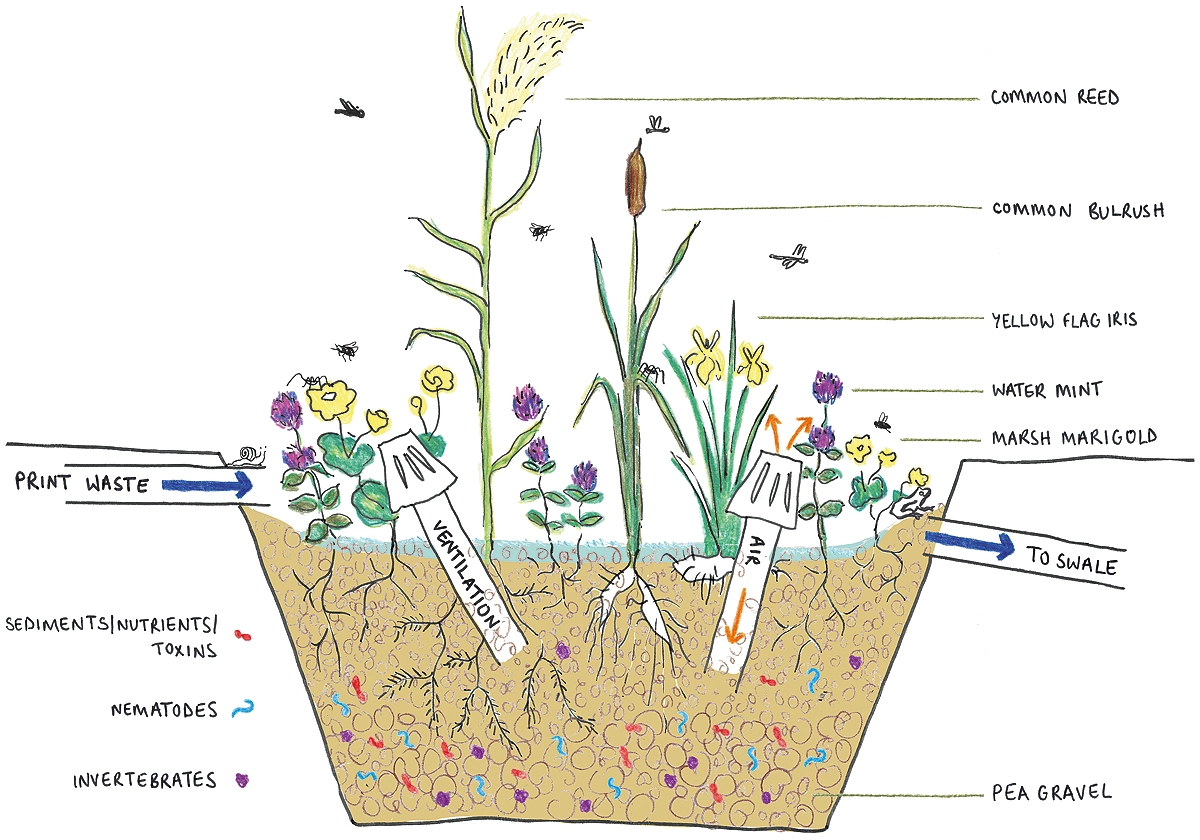
WETLAND CELL SPECIES Ponds 1+2
- Sweet Scented RushAcorus Calamus
- Water PlantainAlisma Plantago
- Flowering RushButomus Umberellatus
- Marsh MarigoldColtha Ualustris
- Slender Spiked SedgeCarex Acuta
- Lesser Pond SedgeCarex Acutiformis
- Common SedgeCarex Nigra
- Pendulous SedgeCarex Pendula
- Greater Pond SedgeCarex Riparia
- MeadowsweetFilipendula Ulmaria
- Reed Sweet-GrassGlyceria Maxima
- Yellow FlagIris Pseudacorus
- Broadleaf RushJuncus Ensifolius
- Purple LoosestrifeLythrum Salicaria
- Water MintMentha Aquatica
- Yellow Monkey FlowerMimulus Guttatus
- Reed Canary GrassPhalaris Arundinacea
- Common ReedPhragmites Australis
- Water DockRumex Hydrolapathum
- Common BulrushScirpus Lacustris
- Lesser ReedmanceTypha Angustifolia
Total Number of Plants 2,205 (21 species)
RESIDENT WILDLIFE
- Emperor DragonflyAnax Imperator
- Cabbage WhitePieris Rapae
- BumblebeeBombus
- Corn buntingEmberiza Calandra
- Pied WagtailMotacilla Alba
- MoorhenGallinula
- WrenTroglodytidae
- KestralFalco Tinnunculus
- DormouseMuscardinus Avellanarius
- Horse Shoe BatsRhinolophidae
…and many more!
WILLOW COPSE SPECIES
- White WillowSalix Alba
- Goat WillowSalix Caprea
- Grey WillowSalix Cinera
- Violet WillowSalix Daphnoides
- Bay WillowSalix Pentandra
- Purple OsierSalix Purpurea
- Almond WillowSalix Triandra
- Gigantic OsierSalix Viminalis ‘Gigantica’
- Common OsierSalix Viminalis
Total Willows - 418